The Future of Energy Infrastructure
The EV HUB — Where Fuel Stations Go to Retire
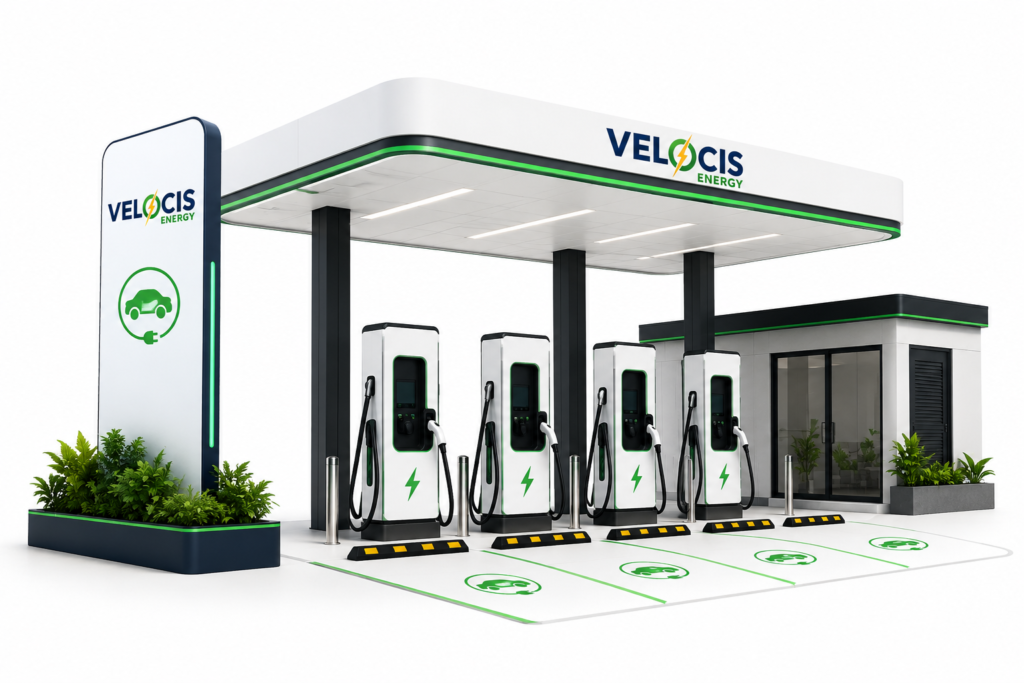
Fuel Station Comparition with EV Hub
Why EV HUBs Will Replace Fuel Stations
Traditional Fuel Station
-
Investment: ₹1.5–3 Crore+High
-
Revenue: ₹15,000–40,000/dayLimited
-
Margin: 2–4% on fuelThin
-
Dwell time: 3–5 minutesLow
-
Ancillary: Minimal
-
Future: Declining demand
-
Pollution & fire risk
Vs
Velocis EV HUB
-
Investment: ₹50L–2.5 Crore1–2x Less
-
Revenue: ₹30,000–3,00,000/day3–8x More
-
Margin: ₹2–5/kWh directHigh
-
Dwell time: 20–60 minutesHigh Spend
-
Ancillary: Cafe, retail, hotel
-
Future: Exponential growth
-
Zero emissions. Zero fire risk.
Official Government Scheme — MHI
PM e-Drive Scheme
PM Electric Drive Revolution in Innovative Vehicle Enhancement
India’s most significant EV policy — approved by the Union Cabinet under PM Modi with a total outlay of ₹10,900 Crore, active from October 1, 2024 to March 31, 2028. The scheme replaces FAME II and is specifically designed to accelerate EV adoption, build charging infrastructure, and support fleet electrification across India.
EV Charging Infrastructure — ₹2,000 Crore
72,300+ public chargers across highways, cities, and government sites. Up to 100% subsidy on equipment for eligible government-owned locations.
Electric Buses — PM e-Bus Sewa
Demand incentive for electric buses for state transport undertakings. Directly drives demand for EV HUB charging revenue.
Electric Trucks & Ambulances — ₹3,679 Crore
Subsidies for e-trucks, e-ambulances, 2W and 3W — creating massive fleet charging demand at highway HUBs.
State-Level Additional Incentives
Many states offer additional subsidies on land, power tariff concessions, GST waivers, and fast-track approvals for EV charging infrastructure.
Velocis Subsidy Support
- End-to-end subsidy application assistance
- Documentation, DPR preparation & compliance
- Liaison with MHI, BEE & state nodal agencies
- Site selection for maximum subsidy eligibility
- OCPP-compliant hardware — subsidy-eligible
Frequently Asked Questions
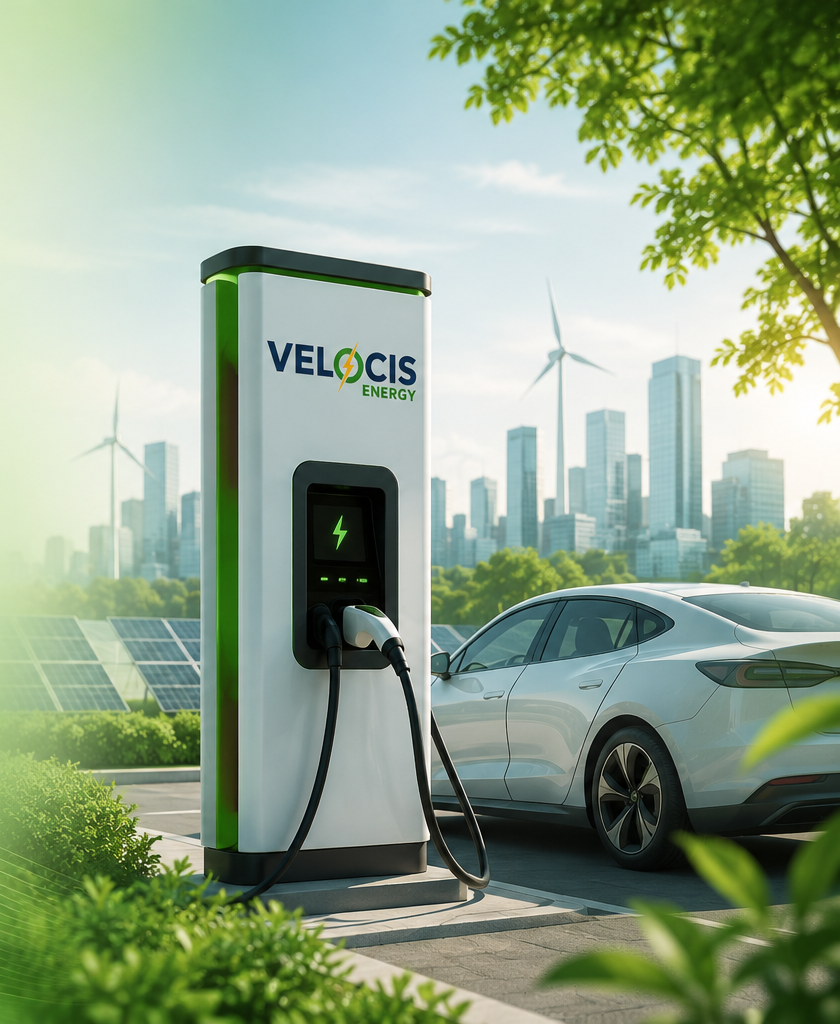
EV charging speed varies based on the charger type, but Velocis Power EZ Charge offers fast EV chargers in India that can charge electric vehicles in as little as 30 minutes with DC fast charging, while home EV charging typically takes longer.
At public EV charging stations powered by Velocis Power EZ Charge, charging time can range from 30 minutes to a few hours depending on the charger’s power rating and the vehicle’s battery capacity.
EV chargers vary in speed depending on their type. Slow chargers typically take several hours, while fast chargers can recharge an electric vehicle in 30 minutes to an hour. Velocis Power EZ Charge offers a wide range of fast and reliable EV chargers across India, including DC fast chargers that enable rapid charging, making it easier for EV users to get back on the road quickly and conveniently.
The EV charging cost in India varies by location and charger type, but Velocis Power EZ Charge offers affordable and transparent pricing through its EV charging app, ensuring cost-effective electric vehicle charging.
You can easily find an EV charger near you by using the Velocis Power EZ Charge app and charger map, which shows public EV chargers, electric car stations near me, and fleet charging solutions across India.